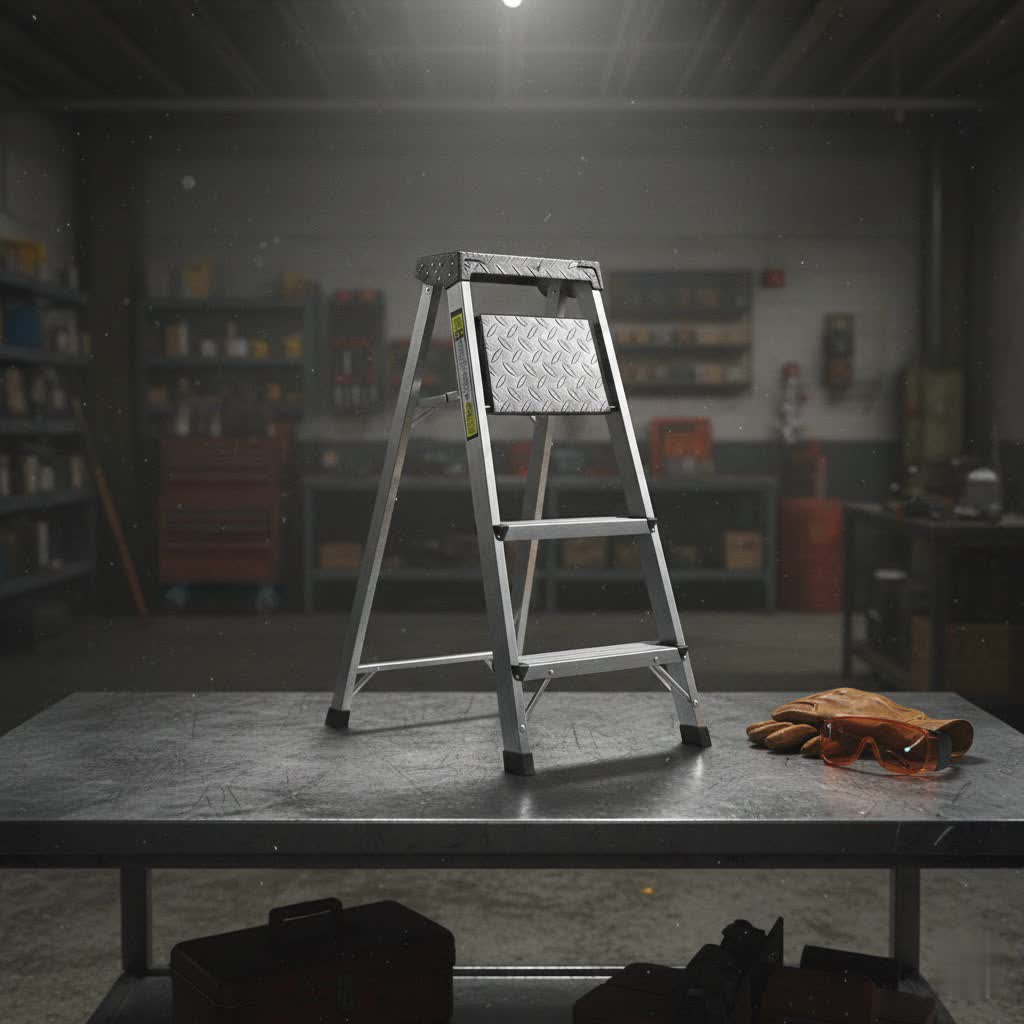
Reaching those high, out-of-the-way spots around your home or job site can often feel like an impossible task, turning simple chores into frustrating expeditions. Whether you’re changing a vaulted ceiling light, painting high walls, or tackling exterior maintenance, a standard step stool simply won’t cut it. This is where a reliable tall step ladder becomes an indispensable tool, offering the stability and height you need to work safely and efficiently.

This comprehensive guide will navigate you through the world of tall step ladders, helping you understand their various types, crucial buying factors, and how to use them safely. Get ready to elevate your capabilities and tackle any high-reaching project with confidence. For compare top home on this site.
The World of Tall Step Ladders
A tall step ladder isn’t just a longer version of its smaller counterpart; it’s engineered for tasks that demand significant vertical access while maintaining a stable, self-supporting base. Understanding what defines a “tall” step ladder and its common applications is the first step in making an informed choice.
What Defines a Tall Step Ladder?
While there’s no single universally agreed-upon height for a “tall” step ladder, they generally refer to models ranging from 8 feet to 20 feet in length, offering a substantial increase in working height compared to typical household step stools. The critical distinction lies between the ladder’s physical height and your actual maximum reach height. An average person can safely reach approximately 4 feet beyond the top standing level of a step ladder. For instance, a 10-foot step ladder typically allows an average user to safely reach up to 14 feet. This calculation is vital to ensure you select a ladder that provides adequate working height without compromising safety by overreaching or standing too high on the ladder.
Why You Need a Tall Step Ladder: Common Applications
Tall step ladders are workhorses for a variety of tasks, both domestically and professionally:
- Home Maintenance: Ideal for cleaning high windows, dusting vaulted ceilings, changing light bulbs in chandeliers, or reaching the top shelves in a garage or pantry.
- Painting and Decorating: Essential for painting high walls, installing crown molding, or hanging decorations in rooms with elevated ceilings.
- Exterior Work: Useful for tasks like clearing gutters on single-story homes, pruning tall hedges, or performing minor siding repairs.
- Professional Settings: In warehouses, retail environments, or workshops, tall step ladders facilitate stock management, equipment maintenance, and installation jobs that require significant elevation without needing a wall for support.
“A common mistake is underestimating the required ladder height. Always factor in your own height and arm reach to determine the true working height you’ll achieve.” – John Peterson, Safety Training Specialist
Types of Tall Step Ladders
The market offers several types of step ladders, each with unique features catering to specific needs. When looking for a tall option, you’ll primarily encounter these variations:
Standard A-Frame Step Ladders
|
Our Picks for the Best Step Ladder in 2026
As an Amazon Associate I earn from qualifying purchases.
|
||
| Num | Product | Action |
|---|---|---|
| 1 | HBTower 2 Step Ladder, Step Stool for Adults,2 Step Ladder Folding Step Stool with Wide Pedal Ergonomic Design |

|
| 2 | HBTower Step Ladder,Lightweight Aluminum Folding Step Stool with Anti-Slip Wide Pedal,330lbs Capacity Step Ladder for Household,Kitchen,Office - BlackWoodgrain |
|
| 3 | HBTower 3 Step Ladder, 3 Step Stool for Adults, 3 Step Ladder Folding Step Stool with Cushioned Handle Step Ladder with Wide Pedal Ergonomic Design,Black |
|
| 4 | 2 Step Ladder, Portable Steel Folding Step Stool with Wide Anti-Slip Pedal & Convenient Handgrip, 500lbs Sturdy Steel Ladder, Black |
|
| 5 | 3 Step Ladder, Portable Folding Ladder for Multi-Purpose, Home, Kitchen, Heavy Sturdy Steel Step Stool with Handrail, Anti-Slip Wide Pedals, Safe-Lock Design, Pass 500lbs Load Testing, Black |
|
| 6 | HBtower 2 Step Ladder, Step Stool with Wide Anti-Slip Pedal, Step Ladder Folding Step Stool for Adults, Lightweight Steel Portable ladders for Home Kitchen |
|
| 7 | HBTower 2 Step Ladder,2 Step Stool for Adults Folding Step Stool with Cushioned Handle with Wide Anti-Slip Pedal Ergonomic Design |
|
| 8 | HBTower 3 Step Ladder Folding Step Stool, 330 Lbs Capacity Step Stool for Adults, Closet Step Stool Ladder with Anti-Slip Wide Pedals Household Office, White |
|
| 9 | GameGem 3 Step Ladder, Folding Step Stool with Wider Pedal, Anti-Slip Feet & Non Slip Stripes, Aluminum Sturdy Material, 300Lbs Capacity, Elegant Look of Cream Chocolate Better Matches Your Home |
|
| 10 | HBTower Step Ladder,Lightweight Aluminum Folding Step Stool with Anti-Slip Wide Pedal,330lbs Capacity Step Ladder-Black |
|
These are the most common type, characterized by their self-supporting “A” shape. They have steps on one side and a hinged back section for stability.
- Pros: Highly stable on flat surfaces, easy to set up, available in various heights, often foldable for storage.
- Cons: Can be cumbersome to move and store at taller heights, limited utility on uneven terrain unless specifically designed.
- Tall Applications: Taller A-frame models (8-12 feet) are excellent for indoor painting, ceiling work, and general maintenance where you need consistent access to a single elevated area.
Platform Ladders (Podium Ladders)
Platform ladders are an enhanced version of the A-frame, featuring a large, comfortable standing platform at the top instead of a narrow step. They often include a guardrail around the platform.
- Pros: Provides a secure and spacious work area, reduces fatigue during extended tasks, excellent stability, ideal for tasks requiring both hands.
- Cons: Generally heavier and less portable than standard step ladders, can be more expensive.
- Tall Applications: Perfect for professional painters, electricians, or anyone performing prolonged work at a fixed height, such as installing complex fixtures or detailed decorating.
Multi-Position (Combination) Ladders
These incredibly versatile ladders use multiple hinges to transform into various configurations, including an A-frame step ladder, an extension ladder, a scaffold base, or even a twin step ladder.
- Pros: Extreme versatility, replaces several single-function ladders, compact for storage despite their multi-functionality.
- Cons: Can be heavier due to complex hinge mechanisms, may require more effort to switch configurations.
- Tall Applications: A multi-position ladder can be set up as a tall A-frame for interior work or extended to reach even greater heights for outdoor tasks, making it a cost-effective solution for diverse needs. Some models can reach up to 21 feet.
Telescoping Step Ladders
While more commonly associated with straight extension ladders, some step ladders also incorporate telescoping technology, allowing their legs to extend and retract to adjust the ladder’s height.
- Pros: Highly adjustable for varying heights, can often be used on stairs or uneven surfaces, compact storage.
- Cons: May have more moving parts, requiring careful maintenance; some models can be less stable than rigid A-frame designs.
- Tall Applications: Excellent for homeowners or professionals who need a tall step ladder for different ceiling heights or who frequently work on stairs.
Key Factors for Choosing the Right Tall Step Ladder (Buying Guide)
Selecting the ideal tall step ladder involves more than just picking the tallest one. Several critical factors must be considered to ensure safety, efficiency, and longevity.
Height and Reach
As discussed, distinguish between the ladder’s overall height and your maximum safe working reach.
- Measure your highest reach point: Determine the maximum height of the tasks you’ll perform.
- Calculate safe ladder height: For a step ladder, stand no higher than two steps down from the top. A general rule of thumb is that your safe reach is about 4 feet above the ladder’s height when standing at the highest safe step.
- Consider your own height: A person’s standing height and arm reach directly impact the required ladder size.
Material and Durability
The material of your tall step ladder affects its weight, durability, and suitability for specific environments.
- Aluminum:
- Pros: Lightweight, corrosion-resistant, easy to move and store.
- Cons: Conducts electricity, making it unsuitable for electrical work. Can dent or bend under extreme impact.
- Fiberglass:
- Pros: Non-conductive (safe for electrical work), extremely durable, weather-resistant.
- Cons: Heavier and typically more expensive than aluminum.
- Steel:
- Pros: Very robust and durable, often has a higher weight capacity.
- Cons: Heaviest option, can be prone to rust if not properly coated or maintained, less portable.
Duty Rating and Weight Capacity
The duty rating indicates the maximum safe load a ladder can support, including the user, tools, and materials. Always choose a ladder with a duty rating that exceeds your expected total load.
| Duty Rating | Maximum Load Capacity | Common Uses |
|---|---|---|
| Type III | 200 lbs | Light-duty household tasks |
| Type II | 225 lbs | Medium-duty household, light commercial |
| Type I | 250 lbs | Heavy-duty, industrial, professional |
| Type IA | 300 lbs | Extra heavy-duty, industrial, construction |
| Type IAA | 375 lbs | Super heavy-duty, industrial, construction |
For tall step ladders, especially for professional use, Type I, IA, or IAA ratings are often recommended to ensure maximum safety and stability.
Essential Safety Features
Safety is paramount, particularly with taller ladders. Look for these features:
- Non-Slip Treads and Feet: Steps and feet should have aggressive non-slip surfaces to prevent slips and provide a secure grip on various floor types.
- Secure Locking Mechanisms: For folding or multi-position ladders, ensure all hinges and spreaders lock firmly into place without any wobble.
- Wide Steps/Platform: Wider steps or a dedicated platform (for platform ladders) provide better foot support and reduce fatigue, enhancing stability.
- Tool Trays/Holsters: Integrated trays or holsters at the top keep tools and small items within easy reach, preventing the need to climb down or carry items unsafely.
- Handrails: Many taller step ladders, especially platform ladders, include handrails for an additional point of contact and increased security.
Portability and Storage
Consider how easily you can move and store your tall step ladder.
- Weight: Lighter materials like aluminum enhance portability.
- Folding Mechanism: Ensure it folds compactly enough for your storage space, whether it’s a garage, shed, or work vehicle.
- Transport Wheels: Some very tall or heavy ladders include wheels for easier repositioning.
Top Brands for Tall Step Ladders
Several brands consistently deliver high-quality, reliable tall step ladders. While specific models change, these manufacturers are known for their commitment to safety and innovation:
- Werner: A dominant name in ladders, Werner offers a vast range of step ladders, including fiberglass options perfect for electrical work and their “Leansafe” series that can safely lean against walls.
- Little Giant Ladders: Renowned for their versatile multi-position ladders, Little Giant provides models that can function as tall A-frame step ladders, extension ladders, and more, making them a favorite for adaptability.
- Louisville Ladder: Another industry leader, Louisville produces robust aluminum and fiberglass step ladders, often favored for their heavy-duty construction and reliability in demanding environments.
- DeWalt: Known for its power tools, DeWalt also offers a selection of durable fiberglass step ladders with features like tool cutouts for convenience and stability.
- Gorilla Ladders: Often found in major home improvement stores, Gorilla Ladders offer a good balance of quality and value, including various aluminum and fiberglass step ladders.
When comparing brands, always review customer feedback and check for industry certifications like ANSI (American National Standards Institute) or EN131 (European standard) to ensure the ladder meets stringent safety benchmarks.
Safe Use and Maintenance of Tall Step Ladders
Even the best tall step ladder is only as safe as its user. Adhering to proper usage guidelines and regular maintenance is crucial to prevent accidents.
Pre-Use Inspection
Before every use, perform a quick check:
- Ensure all steps are clean and free of grease, mud, or debris.
- Verify that hinges, spreaders, and locking mechanisms are functioning correctly and securely engaged.
- Check for any damage, such as bent rails, cracked steps, or loose rivets. Never use a damaged ladder.
- Inspect the ladder’s feet to ensure they are present, in good condition, and provide adequate grip.
Proper Setup and Stability
- Level Surface: Always place the ladder on firm, level ground. Avoid uneven terrain or slippery surfaces.
- Open Fully: Ensure the step ladder is fully open and the spreaders are locked into place before climbing.
- Avoid Overreaching: Position the ladder so you can comfortably reach your work area without leaning excessively to the side. Overreaching is a primary cause of ladder accidents.
- Never Stand on the Top Cap or Highest Step: Always maintain at least two steps below the top cap as a safety margin. The top cap is for tools, not for standing.
Maintaining Three Points of Contact
When climbing, descending, or working on a ladder, always maintain three points of contact (two hands and one foot, or two feet and one hand). This significantly improves stability and reduces the risk of falls. Face the ladder while ascending and descending.
Storage Tips
Proper storage extends your ladder’s life and prevents damage:
- Store it in a dry place, away from extreme temperatures and direct sunlight, which can degrade materials over time.
- Keep it clean and free of debris.
- Store it horizontally on hooks or racks to prevent warping or damage from falling.
Conclusion
A tall step ladder is a powerful tool that significantly expands your capabilities for high-reaching tasks, offering stability, safety, and efficiency. By understanding the different types—from standard A-frames to versatile multi-position models—and carefully considering crucial factors like height, material, duty rating, and safety features, you can confidently select a ladder that perfectly matches your needs and budget. Remember, investing in a high-quality, properly rated tall step ladder and committing to safe usage practices will ensure your projects are completed securely and successfully for years to come.
What high-reaching project are you planning to tackle next with your new tall step ladder?
Frequently Asked Questions
What height step ladder do I need for a 12-foot ceiling?
For a 12-foot ceiling, you would typically need an 8-foot step ladder. This allows you to safely stand on the second or third step from the top, providing a comfortable reach of approximately 12-13 feet, considering an average person’s height and arm extension.
Is fiberglass or aluminum better for a tall step ladder?
Fiberglass is generally better if you anticipate working near electricity, as it is non-conductive and safer in such environments. Aluminum is lighter and corrosion-resistant, making it easier to transport and store, but it conducts electricity. Your specific tasks and safety requirements should dictate the material choice.
Can two people use a tall step ladder at once?
No, standard single-sided step ladders are designed for one person only. Some specialized “twin step ladders” have steps on both sides and are built to accommodate two users, but always check the ladder’s duty rating and manufacturer’s instructions to confirm it is safe for dual occupancy.
How do I know if my tall step ladder is safe?
Check for recognized safety certifications like ANSI (American National Standards Institute) or EN131 (European standard) on the ladder’s label. Additionally, always inspect the ladder for any damage, ensure all locking mechanisms work, and verify the duty rating is appropriate for your weight and the materials you’re carrying.
Get our weekly buyer guide
Practical specs, not advice. Unsubscribe anytime.
